Repair or Replace? Four Signs Your Central HVAC Is Done
Every repair feels like a small decision, but together they add up to a bigger one, and four signs usually show when it is time.
October 7, 2026 · 4 min read
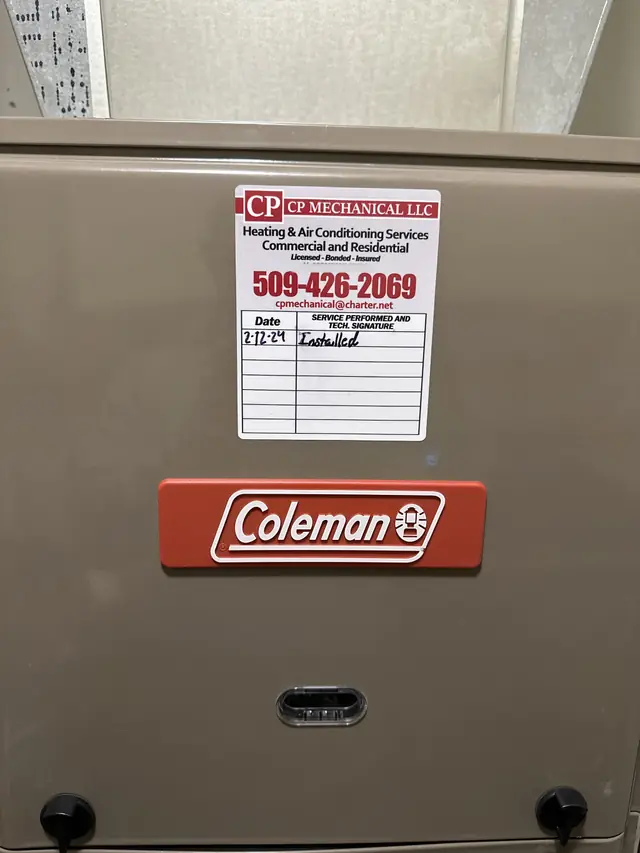
Nobody wants to replace a heating and cooling system. It is expensive, it is disruptive, and the old unit usually still runs, at least some of the time. So most people in the Yakima Valley do what you would expect: they pay for the next repair, and the next, and wait for a clear signal.
At CP Mechanical, we look for four signs that the signal has already arrived. None of them alone settles it, but when two or three show up together, the conversation changes from fixing to replacing.
Sign 1: The system is more than 15 years old
Age is not a death sentence, but it matters. A system past 15 years has been through a lot of Yakima summers and a lot of cold winters, and its parts have been cycling on and off thousands of times. Efficiency drifts down as components wear, and replacement parts can get harder to find on older equipment.
If your system is past that mark and something major fails, such as a compressor or a blower motor, it is worth pricing a repair next to a replacement before you decide. A good contractor will give you both numbers and let you compare them.
Sign 2: You pay for HVAC repairs every year
One repair is maintenance. A repair every spring and every fall is a pattern. When the same system keeps needing a capacitor here, a control board there and a refrigerant top-off the following summer, you are paying for a slow decline in installments.
Keep a simple list of what you have spent on the system over the last few years. Many homeowners are surprised when they add it up. That total, set against the cost of a new system with a clean start, is often the most useful number you will have.
Sign 3: The system does not hold comfortable temperatures
Some rooms never get warm in January. The upstairs is hot at 6 p.m. in July no matter what the thermostat says. The system runs and runs and the house never quite settles. Those are comfort problems, and they are not always the equipment's fault alone.
Sometimes the cause is a system that was never sized properly for the house, or ductwork that leaks or was never designed for the rooms it now serves. Sometimes it is a tired unit that no longer has the capacity it started with. A technician can tell the difference, and that is why replacement should begin with measurement, not with picking a unit off a shelf.
Sign 4: Your energy bill suddenly spikes
A bill that jumps with no change in weather or habits points to poor performance somewhere. Compare this July to last July, not to last month, so you are comparing the same conditions. If the cost climbed and the comfort did not, the system is working harder to deliver the same result, and that rarely corrects itself.
A spike does not always mean replacement. A matted coil, a dirty filter or a failing part can cause it too, and those are cheaper to fix. That is the reason to have someone look before you decide.
How a site inspection sizes a new system
If replacement is the right answer, the most important step is the one before any equipment is ordered. Our central HVAC page says it directly: we perform a comprehensive site inspection to gather the measurements, usage and capacity data needed to properly size your system.
Sizing matters in both directions. A unit that is too small never keeps up on the hottest and coldest days. A unit that is too big cycles on and off in short bursts, is noisier, and is harder on the equipment. The right size comes from a load calculation based on your actual house, not a guess based on square footage alone.
A replacement project can include more than the box in the yard. Depending on what the inspection finds, it can cover:
- Load calculation and system sizing
- New ductwork or modifications to the ductwork you have
- Air handler and outdoor condenser installation
- Thermostat installation, standard or smart
- System inspection and performance testing once the work is done
We offer accurate, no-obligation estimates, and financing is available, so you can see the whole picture before you commit to anything.
What to do next
Count how many of the four signs apply to you. If it is none, a tune-up and a coil and filter check may be all you need. If it is two or more, get a site inspection and a written estimate before the next breakdown forces a rushed decision. Doing it in the shoulder season, when you are not sweating or shivering, gives you time to think.
Our central HVAC page covers installation, replacement and maintenance for homes and businesses. To set up an inspection in Yakima, Selah, Wapato, Toppenish or anywhere nearby in the valley, call CP Mechanical at (509) 426-2069.
CP Mechanical LLC, (509) 426-2069
Call (509) 426-2069More articles
Cottonwood and Your AC Condenser: What a Summer Coil Clean Does
By July, a lot of Yakima Valley air conditioners are wearing a gray felt blanket, and it is quietly making your system work harder.
Ductless Mini Splits for Older Yakima Homes
If your house never had ducts, or the ducts you have do not reach every room, a ductless system may be the cleanest fix.