Heat Pump Short Cycling and Other Warning Signs
Four symptoms account for most heat pump service calls, and catching them early keeps a small problem small.
October 7, 2026 · 4 min read
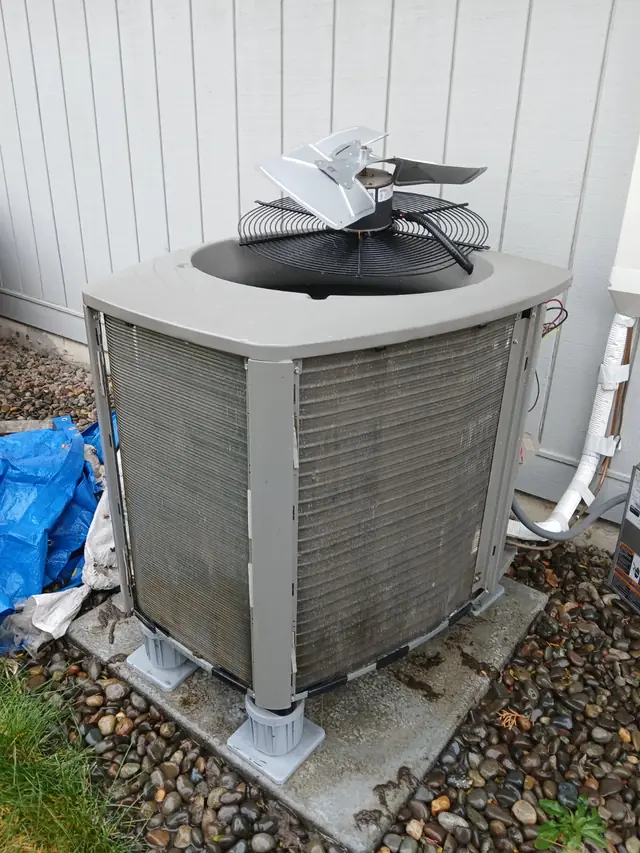
A heat pump does two jobs with one machine. In summer it cools your house. In winter it heats it. That makes it a good fit for the Yakima Valley, where we get long hot summers and real winters, and it also means a heat pump never gets a season off. It is working most of the year, and wear shows up.
The good news is that heat pumps usually give warning. If you know what to watch for, you can call before a mild problem turns into a no-heat night in January.
How a heat pump works, quickly
A heat pump does not make heat by burning something. It moves heat from one place to another using refrigerant. In cooling mode it pulls heat out of your house and releases it outdoors, like a central air conditioner. In heating mode a reversing valve flips the direction, and the system pulls heat out of the outdoor air and brings it inside. Even cold air holds some heat, which is why a heat pump can warm a house in the cold.
Because it moves heat instead of creating it, a heat pump can deliver a lot of comfort for the electricity it uses. It also means the system depends on clean coils, good airflow, a proper refrigerant charge and healthy electrical parts all at once. When one drifts, performance does too.
The four warning signs
Our heat pump repair page lists the problems we are called out for most often. They are worth knowing by heart.
- Poor heating or cooling performance. The system runs, but the air coming out is lukewarm, or the house takes much longer than it used to.
- Unresponsive controls. You change the thermostat and nothing happens, or the system does something different from what you asked.
- Frequent cycling on and off. The system starts, runs a few minutes, shuts down and starts again.
- Leaking refrigerant. You may see ice on the lines or the coil, notice an oily residue near fittings, or hear a hissing sound.
Short cycling, in plain terms
Short cycling is the one people notice because it is audible. The outdoor unit kicks on, hums for a few minutes, clicks off, and then does it again. A heat pump that cycles this way is rarely reaching a steady, efficient run, and the repeated starts are hard on the compressor and the electrical parts.
Typical causes include a clogged filter or a matted outdoor coil that makes the system overheat and shut off, a thermostat that is misreading the room, a low refrigerant charge, and electrical parts that are failing. A system that was sized too large for the house can also do it. These are different problems with different fixes, so a guess is not much use.
What you can check before you call
- Look at the air filter. If it is gray and packed, replace it and see whether the symptoms ease.
- Check the outdoor unit for cottonwood fluff, leaves, snow or ice blocking the coil, and keep a couple of feet of clearance around it.
- Check the thermostat settings and the batteries if it uses them.
- Look at the breaker panel to make sure nothing has tripped.
- Note when it happens, such as only on hot afternoons or only in the morning. That detail helps the technician.
In winter, an outdoor unit may briefly steam or shed ice during a defrost cycle. That can be normal. Ice that builds and stays, or a unit that stops heating entirely, is not.
Refrigerant is the one thing to leave alone. It is a sealed system, and low refrigerant means there is a leak somewhere. Topping it off without finding the leak is a short-term patch.
Calling early pays off
One of our customers, Jose Ramos, left a Google review after his heat pump stopped working properly. He wrote that the technician took the time to thoroughly diagnose the issue and “explained what was going on in simple terms.” That is how we want every visit to go. We also stock our service vehicles fully, to avoid the delays that come from missing parts and equipment.
As for lifespan, we tell customers that heat pumps last an average of 15-20 years, depending on the model and maintenance. The maintenance half of that sentence is the part you control. A heat pump that gets its coils cleaned, its filter changed and its electrical connections checked every year is far more likely to reach the long end of that range.
Our heat pump page covers installation, repair, inspections and estimates for homes and businesses. If yours is cycling, blowing weak air or not listening to the thermostat, call CP Mechanical at (509) 426-2069. We serve Yakima, Selah, Wapato, Toppenish, Naches and the rest of the valley.
CP Mechanical LLC, (509) 426-2069
Call (509) 426-2069More articles
Cottonwood and Your AC Condenser: What a Summer Coil Clean Does
By July, a lot of Yakima Valley air conditioners are wearing a gray felt blanket, and it is quietly making your system work harder.
Repair or Replace? Four Signs Your Central HVAC Is Done
Every repair feels like a small decision, but together they add up to a bigger one, and four signs usually show when it is time.